In the 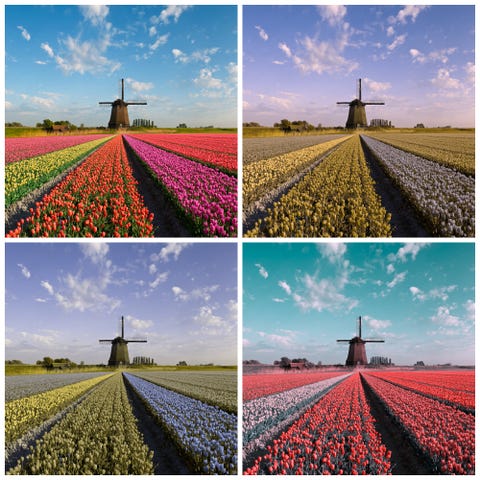 (One ex. of what colorblindness may look like.)
In the article “Colorblindness is the New Racism,” the authors, Armstrong, M.J. and Wildman, S., argue that in this day and age, society may be so afraid to give any attention to race at all that they are “colorblind” to differences. On page 63, the article begins by stating that, “white privilege is a knapsack of benefits of which the holder could remain oblivious.” Also, that “the possessor of the knapsack relies on the advantages they provide, but may be unaware of them.” Take a look here at an article from The New York Times that describes that white people are starting to notice their own whiteness. (The New York Times). As a white female who grew up in a white community I was not privy regarding being treated unfair nor do I remember others in my community being treated unfair. Now as an adult, I see and believe some instances in the media are directed towards the less privileged population which results in being treated unfair. The authors also go on to discuss that we, our leaders, need to identify and further understand whiteness and all that it encompasses in order to help change the thought processes and “bridge individuals across identity categories.” With our classrooms becoming more and more diverse in socioeconomic status, culture, language, sexuality, and identification of gender we are responsible to allow each individual to feel safe, secure, and successful. Super-diversity, as discussed in “Language Magazine,” (April 2013), should not hold individuals back from developing healthy future academic success. It states, on page 67, “People form first impressions of others to which the perceiver utilizes a target’s particular characteristics.” These preconceived categories are formed from society, family institutions, and peer circles. ("Superdiverse Classrooms") Although these first impressions may be proven wrong, and most likely, many will be, the person being “evaluated” may already have a leg-up, so to speak, or one foot in the grave. It basically all depends on how the person perceives those specifics characteristics. This brings us to the article, by Roose, “All Lives Matter.” The colorblind perception society is overcome by may also pertain to the movement, #blacklivesmatter. Here some of the public may disregard the injustice towards diverse people, more specifically, people of color. They do this by grouping all people in the movement, as if all people experience the same discrimination. Although some white people may encounter this type of treatment, can one say that the amount of each is equal? News media and journalism report on how mostly people of color are targeted, in the community by having the police called on them, store owners keeping a watchful eye on them while shopping, and police brutality. Although I see this at an alarming rate, I recently heard of how a white man was murdered by a person of color. The news media covered this information briefly and it was not discussed again on the channel we have on in our home. (which is the reason why I am unable to share names) I feel the reason this was not covered more in depth is because the news station would be looked at in a different way and may even receive criticism for following up with this news.Perhaps this too would fit in the category of "colorblindness. I also have unanswered questions about the recent scandal of the black,gay actor who created a staged attack against himself. He stated in a one-on-one interview that he was, “confronted by masked men who hurled homophobic and racial slurs at him, and announced it was “MAGA country, J. Smollett Interview” according to The New York Times. Again, the news coverage on this issue has quelled and although
this person’s actions were directed towards others, in a severe manner, this
behavior is not being looked at under a fine-toothed comb, as it would if was a
white person who acted in the same manner.
I am not disputing the poor behavior many put towards colored people;
however, I am stating that perhaps the news is afraid to share all of the
information in attempt to be “racially correct.” So I ask, does there continue to be injustice in our country? Absolutely. Do we need to become more aware of our whiteness, our knapsack, and our privileges? Absolutely. With this knowledge we grow to be better, more informed individuals who can bridge the differences so all people will FEEL welcomed, appreciated, and embraced.
Again, the news coverage on this issue has quelled and although
this person’s actions were directed towards others, in a severe manner, this
behavior is not being looked at under a fine-toothed comb, as it would if was a
white person who acted in the same manner.
I am not disputing the poor behavior many put towards colored people;
however, I am stating that perhaps the news is afraid to share all of the
information in attempt to be “racially correct.” So I ask, does there continue to be injustice in our country? Absolutely. Do we need to become more aware of our whiteness, our knapsack, and our privileges? Absolutely. With this knowledge we grow to be better, more informed individuals who can bridge the differences so all people will FEEL welcomed, appreciated, and embraced.
(One ex. of what colorblindness may look like.)In the article “Colorblindness is the New Racism,” the authors, Armstrong, M.J. and Wildman, S., argue that in this day and age, society may be so afraid to give any attention to race at all that they are “colorblind” to differences. On page 63, the article begins by stating that, “white privilege is a knapsack of benefits of which the holder could remain oblivious.” Also, that “the possessor of the knapsack relies on the advantages they provide, but may be unaware of them.” Take a look here at an article from The New York Times that describes that white people are starting to notice their own whiteness. (The New York Times). As a white female who grew up in a white community I was not privy regarding being treated unfair nor do I remember others in my community being treated unfair. Now as an adult, I see and believe some instances in the media are directed towards the less privileged population which results in being treated unfair. The authors also go on to discuss that we, our leaders, need to identify and further understand whiteness and all that it encompasses in order to help change the thought processes and “bridge individuals across identity categories.” With our classrooms becoming more and more diverse in socioeconomic status, culture, language, sexuality, and identification of gender we are responsible to allow each individual to feel safe, secure, and successful. Super-diversity, as discussed in “Language Magazine,” (April 2013), should not hold individuals back from developing healthy future academic success. It states, on page 67, “People form first impressions of others to which the perceiver utilizes a target’s particular characteristics.” These preconceived categories are formed from society, family institutions, and peer circles. ("Superdiverse Classrooms") Although these first impressions may be proven wrong, and most likely, many will be, the person being “evaluated” may already have a leg-up, so to speak, or one foot in the grave. It basically all depends on how the person perceives those specifics characteristics. This brings us to the article, by Roose, “All Lives Matter.” The colorblind perception society is overcome by may also pertain to the movement, #blacklivesmatter. Here some of the public may disregard the injustice towards diverse people, more specifically, people of color. They do this by grouping all people in the movement, as if all people experience the same discrimination. Although some white people may encounter this type of treatment, can one say that the amount of each is equal? News media and journalism report on how mostly people of color are targeted, in the community by having the police called on them, store owners keeping a watchful eye on them while shopping, and police brutality. Although I see this at an alarming rate, I recently heard of how a white man was murdered by a person of color. The news media covered this information briefly and it was not discussed again on the channel we have on in our home. (which is the reason why I am unable to share names) I feel the reason this was not covered more in depth is because the news station would be looked at in a different way and may even receive criticism for following up with this news.Perhaps this too would fit in the category of "colorblindness. I also have unanswered questions about the recent scandal of the black,gay actor who created a staged attack against himself. He stated in a one-on-one interview that he was, “confronted by masked men who hurled homophobic and racial slurs at him, and announced it was “MAGA country, J. Smollett Interview” according to The New York Times.
Again, the news coverage on this issue has quelled and although
this person’s actions were directed towards others, in a severe manner, this
behavior is not being looked at under a fine-toothed comb, as it would if was a
white person who acted in the same manner.
I am not disputing the poor behavior many put towards colored people;
however, I am stating that perhaps the news is afraid to share all of the
information in attempt to be “racially correct.” So I ask, does there continue to be injustice in our country? Absolutely. Do we need to become more aware of our whiteness, our knapsack, and our privileges? Absolutely. With this knowledge we grow to be better, more informed individuals who can bridge the differences so all people will FEEL welcomed, appreciated, and embraced.
A great movie to watch is "Remember the Titans." This movie is based on a true story that takes place in 1971and revolves around Virginia state football championships. Take a look at the trailer here. (Remember the Titans movie)

Hi Jamie, I love your first picture. That picture alone gives great insight to all the details to what someone may be missing if colorblind. Or looking through the lens of rose colored glasses. I agree the media plays a big influence on how discrimination is interpreted by society. I agree and disagree that the media at times tries to portray itself as politically correct. For example, I just watched the Netflix documentary about the disappearance of Madeline McCann, and in that documentary they stated that white, blonde, blue eyed children that disappear are reported on more than those of other races. The statistics these children will be found, or their perpetrators are caught are higher because of the amount of the media coverage they receive as opposed to a missing black child. How so very sad. There are many articles showcasing this and I am including one here. https://www.denverpost.com/2013/02/14/why-do-we-seldom-hear-about-missing-black-children/
ReplyDeleteJamie,
ReplyDeleteFirst let me say that your first picture really resonated with me. Using the term"colorblindness" in a different way to convey the same sort of ideas was great. Second of all, I couldn't agree more with what you said about Jussie Smollett. It seems that since it came out that he lied, it all sort of dissipated, and I'm not sure I have an opinion on why I think that is. However, I think the points your brought up about it potentially being so that the media can stay racially correct would be a good potential reason. Nice job! :)
Jamie, I am not sure that I agree with the possibility that the media ignored the Jussie Smollett story because they want to be more "racially correct".. but I think that the other stuff you talked about is interesting, especially when you referenced the discrimination people of color experience when dealing with the police. It reminds me of a podcast I listened to the other month about racial discrimination by the police. The podcast details the story of a bunch of teens that go missing from Long Island and their families insist their children are missing while the police insist they are merely runaways. The police continue to turn a blind eye until two of the missing children are young white women and an investigation finally begins and reveals a much harsher truth about the so-called "runaways".
ReplyDeletehttps://www.thisamericanlife.org/657/the-runaways
Your points about media representation are so important -- certainly the media play a big role in how we understand issues of race, power and privilege. While I think the example you give about a white man being murdered by a person of color is likely true, it is kind of like "living in a rainy climate and not getting rained on yourself" from Johnson. People of color spend more time in that rain and when a white person gets rained on too it doesn't negate the original premise that POC are rained on MORE. We will continue to talk about the individual vs. structural issues of power all semester!
ReplyDeleteI have to disagree with what you said about the Jussie Smollett story not being covered thoroughly after the police investigated his claims and proved them to be made-up. I saw multiple stories on this on national morning news on different days. To go off of what Denise said, I also saw the Madeline McCann documentary and remember how they talked about the amount of coverage her story got, saying it was because she came from an upper class family and she was white, blonde, and blue-eyed, and how other children that disappeared in Portugal that were of lower class or that were darker skinned did not get the amount of media coverage or amount of police investigation into their cases. I do like the quotes you included in the beginning of your post about how the person with privilege often does not know the privileges he or she has because of their status. It is important for us as educators and for me specifically as a white, educated person to acknowledge my privilege and stand up for those who do not have the same privilege that I do.
ReplyDelete